Showing all 10 results
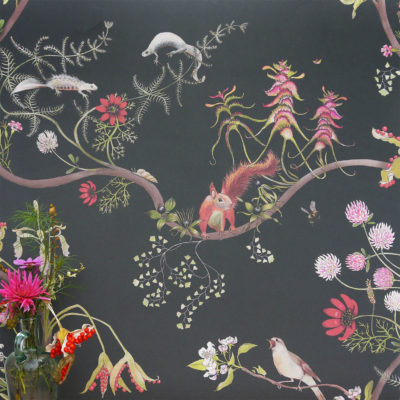
Mercia Vines Wallpaper
(Price above is per sample – please email us for the full pricelist.)
This pattern shows English species suggested by the imaginary species in Dr Suess’s The Lorax. It is organised in an ogee pattern, made of ribbons. They are reminiscent of the double helix of the DNA that determines how we all turn out, every living thing, and of chain link fences, and breaking through them to get out into nature.
The humming fish are represented by great crested newts, the precious truffula trees are clover flowers whilst the playful barballoots are the red squirrels. The bees which also feature in a companion print are short-haired bumblebees – a wonderful conservation success story as they were extinct in the UK but acres of flower-rich meadows were planted in Kent, the bees were reintroduced and now buzz about with other rare bees benefitting from this rich habitat. Other flowers include several species of clover, Pheasant’s eye, crested cowheat, Stinking iris, whorled millifoil, Carthusian pinks, Herb Paris, wintergreen and blossoms of a rare old English breed a apple. Great great grandfather snail is the lagoon spire snail (thought extinct, but recently found in Chichester harbour).
Companion prints include Mercia Ribbons and Mercia Bees, featuring details from this larger scale design.
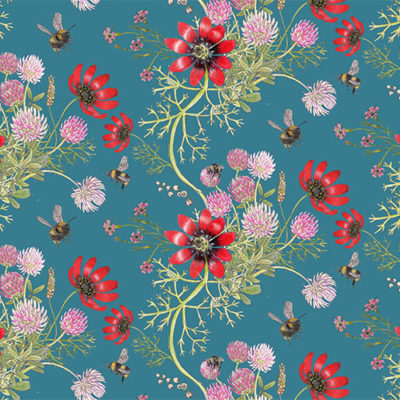
Mercia Bees Wallpaper
(Price above is per sample – please email us for the full pricelist.)
Mercia Bees is a smaller scale print in the English Mercia collection, with a 6” half drop repeat. It features the short-haired bumblebee, a species driven to extinction in England, but recently reintroduced into specially planted flower-rich meadows in the region of Dungeness. The bees are foraging on clover, and pheasant’s eye, a rare wildflower introduced to the UK in Roman times. The design has a nostalgic feel while having a crisp contemporary feel. With exquisite botanical and biological detail, this design is part of the growing passion in interiors for honouring the natural world.
Mercia Bees Linen
(Price above is per sample – please email us for the full pricelist.)
Mercia Bees is a smaller scale print in the English Mercia collection, with a 6” horizontal half drop repeat. It features the short-haired bumblebee, a species driven to extinction in England, but recently reintroduced into specially planted flower-rich meadows in the region of Dungeness. The bees are foraging on clover, and pheasant’s eye, a rare wildflower introduced to the UK in Roman times.
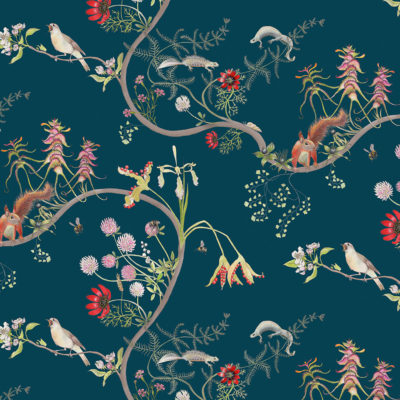
Mercia Vines Linen
(Price above is per sample – please email us for the full pricelist.)
The English Mercia collection is Susy Paisley’s tribute to one of the greatest
conservation parables ever written, The Lorax by Dr Seuss. The species in
the design are based on real world English equivalents of the imaginary
species that feature in the Lorax story – inhabiting the region of the ancient
kingdom of Mercia. The humming fish are represented by great crested
newts, the precious truffula trees are clover flowers whilst the playful
barballoots are the red squirrels. The bees which also feature in a
companion print are short-haired bumblebees – a wonderful conservation
success story as they were extinct in the UK but acres of flower-rich
meadows were planted in Kent, the bees were reintroduced and are now
thriving. Other flowers include several species of clover, Pheasant’s eye.
crested cowwheat, Stinking iris, whorled millifoil, Carthusian pinks, Herb Paris,
wintergreen and blossoms of a rare old English breed a apple.
Companion prints include Mercia Ribbons and Mercia bees, featuring
details from this larger scale design.
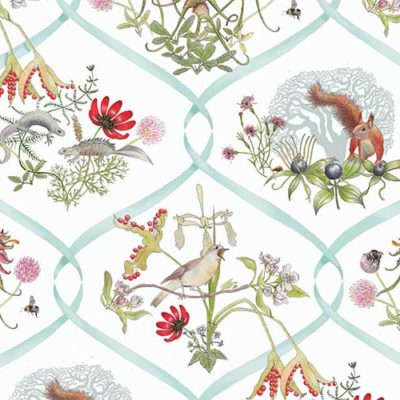
Mercia Ribbons Wallpaper
(Price above is per sample – please email us for the full pricelist.)
This pattern shows English species suggested to me by the imaginary species in Dr Suess’s The Lorax. It is organised in an ogee pattern, made of ribbons. They remind me of the double helix of the DNA that determines how we all turn out, every living thing, and of chain link fences, and breaking through them to get out into nature.
The humming fish are represented by great crested
newts, the precious truffula trees are clover flowers whilst the playful
barballoots are the red squirrels. The bees which also feature in a
companion print are short-haired bumblebees – a wonderful conservation
success story as they were extinct in the UK but acres of flower-rich
meadows were planted in Kent, the bees were reintroduced and are now
thriving. Other flowers include several species of clover, Pheasant’s eye,
crested cowwheat, Stinking iris, whorled millifoil, Carthusian pinks, Herb Paris,
wintergreen and blossoms of a rare old English breed a apple. Great great grandfather snail is the lagoon spire snail (thought extinct, but recently found in Chichester harbour)
Companion prints include Mercia Ribbons and Mercia bees, featuring
details from this larger scale design.
Mercia Vines Wallpaper stock
(Stock sale)
This pattern shows English species suggested by the imaginary species in Dr Suess’s The Lorax. It is organised in an ogee pattern, made of ribbons. They are reminiscent of the double helix of the DNA that determines how we all turn out, every living thing, and of chain link fences, and breaking through them to get out into nature.
The humming fish are represented by great crested newts, the precious truffula trees are clover flowers whilst the playful barballoots are the red squirrels. The bees which also feature in a companion print are short-haired bumblebees – a wonderful conservation success story as they were extinct in the UK but acres of flower-rich meadows were planted in Kent, the bees were reintroduced and now buzz about with other rare bees benefitting from this rich habitat. Other flowers include several species of clover, Pheasant’s eye, crested cowheat, Stinking iris, whorled millifoil, Carthusian pinks, Herb Paris, wintergreen and blossoms of a rare old English breed a apple. Great great grandfather snail is the lagoon spire snail (thought extinct, but recently found in Chichester harbour).
Companion prints include Mercia Ribbons and Mercia Bees, featuring details from this larger scale design.
Mercia Bees Wallpaper Stock
(Price above is per sample – please email us for the full pricelist.)
Mercia Bees is a smaller scale print in the English Mercia collection, with a 6” half drop repeat. It features the short-haired bumblebee, a species driven to extinction in England, but recently reintroduced into specially planted flower-rich meadows in the region of Dungeness. The bees are foraging on clover, and pheasant’s eye, a rare wildflower introduced to the UK in Roman times. The design has a nostalgic feel while having a crisp contemporary feel. With exquisite botanical and biological detail, this design is part of the growing passion in interiors for honouring the natural world.
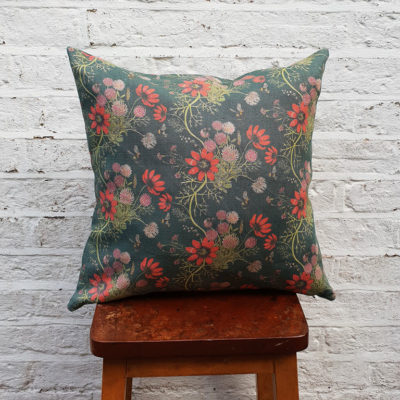
Mercia Bees Cushion in Deep Blue
Mercia Bees is a smaller scale print in the English Mercia collection, with a 6” horizontal half drop repeat. It features the short-haired bumblebee, a species driven to extinction in England, but recently reintroduced into specially planted flower-rich meadows in the region of Dungeness. The bees are foraging on clover, and pheasant’s eye, a rare wildflower introduced to the UK in Roman times.
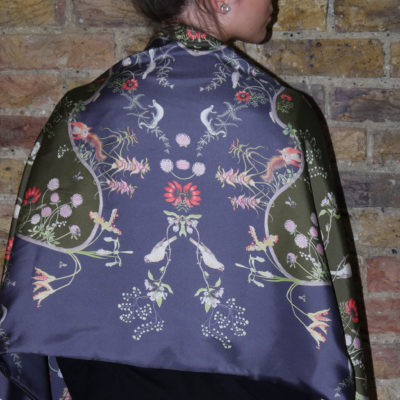
Mercia Vines Silk Wrap
An elegant double sided silk wrap measuring 50 cm wide and 200 cm long. It is digitally printed using environmentally-friendly process on 35 g per m2 weight Habotai silk. Lovely drape and versatile styling. Dry cleaning is recommended.
A two-tone looping and whimsical design that celebrates English species of conservation interest.
Mercia Ribbons Linen
(Price above is per sample – please email us for the full pricelist.)
This pattern shows English species suggested by the imaginary species in Dr Suess’s The Lorax. It is organised in an ogee pattern, made of ribbons. They are reminiscent of the double helix of the DNA that determines how we all turn out, every living thing, and of chain link fences, and breaking through them to get out into nature.
The humming fish are represented by great crested
newts, the precious truffula trees are clover flowers whilst the playful
barballoots are the red squirrels. The bees which also feature in a
companion print are short-haired bumblebees – a wonderful conservation
success story as they were extinct in the UK but acres of flower-rich
meadows were planted in Kent, the bees were reintroduced and are now
thriving. Other flowers include several species of clover, Pheasant’s eye,
crested cowheat, Stinking iris, whorled millifoil, Carthusian pinks, Herb Paris,
wintergreen and blossoms of a rare old English breed a apple. Great great grandfather snail is the lagoon spire snail (thought extinct, but recently found in Chichester harbour)
Companion prints include Mercia Vines and Mercia Bees, featuring
details from this larger scale design.